Client
Freshplate
Sector

Food-Ordering Platform Modernization

Business Model

Commission-based marketplace connecting home-chefs with consumers

Freshplate

Freshplate
Case Study

Executive Summary

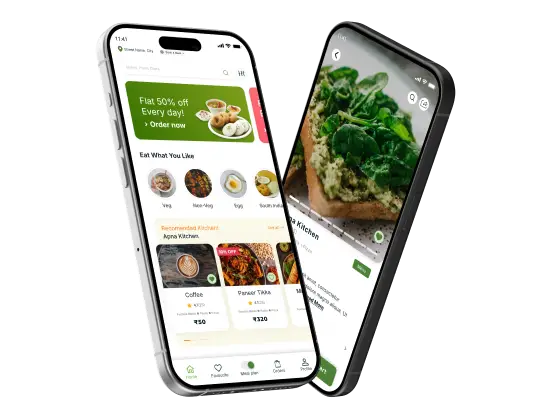
Freshplate—a bootstrapped FoodTech scale-up—set out to reinvent neighborhood dining by connecting home-chefs directly to hungry customers. Its early Android MVP proved demand, but the codebase could not sustain growth: new chefs waited weeks for onboarding, peak-hour latency hit four seconds, and a fragmented delivery workflow left orders cold—literally.

With Series-A funding on the line, Freshplate needed an enterprise-grade, chef-centric ordering ecosystem—web, iOS, Android, and an integrated delivery stack—in just four months. It also had to double first-time user conversion before the next investor demo.

Steady Rabbit mobilised a Micro-GCC squad—a five-person Core team, Flex specialists for cloud and DevOps spikes, and a zero-cost Buffer bench. Across eight sprints we:

  • Re-architected the monolith into event-driven micro-services running on AWS EKS
  • Launched React-Native and web apps that cut checkout friction by 32 %
  • Built a Chef Portal with real-time menu management and AI-driven photo enhancement
  • Integrated dispatch logistics, shrinking average delivery window 38 %
  • Achieved zero critical bugs at launch and 14 pp uplift in day-one activation

The result? Freshplate secured its Series-A term-sheet, surpassed 100 k monthly orders inside six weeks, and set the stage for national expansion—all without a single missed sprint milestone.

Client Profile & Business Context

  • Client
    Freshplate

    India-based hyperlocal FoodTech platform

  • Founded

    2021

  • Business Model

    Commission-based marketplace connecting home-chefs with consumers
  • Pre-engagement State

    Android MVP (15 k users), rudimentary PHP backend, manual chef onboarding

  • Strategic Goal

    Secure Series-A by proving scalable tech and hitting 100 k monthly order target

Freshplate’s USP is chef authenticity: each cook curates a limited daily menu, often from their own kitchen. The platform must therefore:

  • Support rapid chef onboarding with menu photos, pricing, and availability
  • Guarantee real-time inventory to avoid cancelled orders
  • Orchestrate last-mile delivery with multiple regional logistics partners

Operationally, Freshplate’s lean five-member dev team juggled backlog triage and prod firefighting. Leadership wanted a partner that could own the roadmap and deliver predictable, investor-credible velocity.


Problem Statement / Key Challenges

Scalability & Performance

  • PHP monolith on a single EC2 instance; p95 API latency 4 s during dinner rush
  • Chef inventory updates triggered full-table locks—no multi-chef concurrency

Fragmented User Experience

  • Android-only app limited TAM; iOS users stuck on a mobile web view
  • Three-step checkout with external payment redirect—checkout drop-off 31 %

Manual Chef Operations

  • Onboarding via Google Forms + WhatsApp; average go-live time 10 days
  • Menu photos inconsistent; no portion or allergy metadata

Delivery Coordination Maze

  • Separate dashboards for each courier partner; riders often double-booked
  • No ETA visibility for consumers—support tickets spiked 42 % month-on-month

Aggressive Timeline & Funding Pressure

  • Investor demo in 20 weeks; Series-A conditional on cross-platform launch + order-volume KPI
  • Internal team bandwidth exhausted—risk of slip approached 90 % per SteadCAST diagnostic

Our Approach

Micro-GCC Squad Design

Layer
Roles
Key Mandate
Core (5)
Squad Lead / PM, 2 React-Native/React Devs, Go Services Engineer, QA Automation
End-to-end product engineering & release cadence
Flex (2)
AWS DevOps SME, Data Engineer (PostgreSQL → DynamoDB migration)
High-risk spikes: IaC, zero-downtime migration, caching strategy
Buffer (1)
Shadow Front-End Dev
Covers PTO/attrition at Steady Rabbit cost

Delivery & Governance

Two-week Sprints

With Plan-Left gates: Persona → Acceptance → Risk → Arch Sketch → Estimation → Capacity (SteadCAST) → Test Note.

Infrastructure-as-Code

Via Terraform Cloud; blue/green EKS deploys with automated rollback.

CI/CD

GitHub Actions, SonarCloud (quality gate ≥ A), Snyk OSS scans.

Analytics

Amplitude events instrumented from Day 10; activation funnel baselined early.

Weekly Exec Steering:

30-minute demo + KPI dashboard; eliminates surprise slips.

Discovery Sprint Highlights

Design-Thinking Workshop

Mapped chef + consumer journeys; prioritised “first hot meal in 30 min” KPI.

Architecture Blueprint

Event-driven micro-services, DynamoDB per-chef partitions, GraphQL BFF, S3 media pipeline.

Risk Register

Delivery API unreliability flagged; Flex DevOps to build circuit-breaker pattern.

Outcome: backlog locked, velocity forecast 92 SP/sprint, projected launch Week 16.
Solution Delivered

Cloud-Native Micro-Services

  • Go + gRPC ingest service writes chef menus to DynamoDB; latency < 50 ms.
  • Order service publishes events to Kafka; Lambda functions multiplex courier APIs
  • GraphQL Gateway unifies consumer queries; response caching layered with Redis.

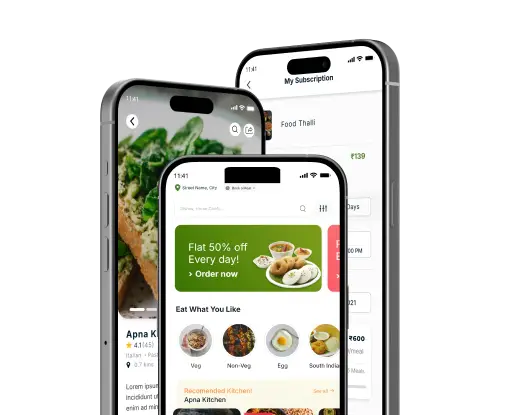
Cross-Platform Consumer Apps

  • React-Native shared codebase for iOS & Android—95 % code reuse.
  • Next.js PWA improves SEO and supports deep-link sharing.
  • Checkout rebuilt using Razorpay SDK; one-tap UPI flow.

Chef Portal

  • S3 + Lambda image pipeline auto-enhances photos (brightness, watermark).
  • Real-time inventory toggle; portion & allergy tags stored in DynamoDB.
  • Push-notification SDK (Firebase/APNS) warns chefs of low stock.

Delivery Integration Layer

  • Courier-agnostic Adapter Pattern with retry & circuit-breaker; SLA breach alerts in Slack.
  • ETA service calculates distance via Google Distance Matrix API and publishes to consumer app in real time.

Observability & Compliance

  • OpenTelemetry traces → Grafana for latency dashboards.
  • AWS WAF & Shield guard against Layer 7 attacks; PCI DSS SAQ-A compliance achieved.

Execution Journey

Week
Milestone
Metrics Tracked
Predictability Notes
1-2
Sprint 0 discovery, architecture
Risk register built
100 % gate compliance
3-4
Ingest & DynamoDB PoC
Ingest TPS 220 → 1 100
SteadCAST risk-high WIP < 15 %
5-6
React-Native skeleton, GraphQL gateway
App first render 3.1 s
Buffer unused
7-8
Chef Portal, image pipeline
Photo processing 1.9 s
Flex DevOps spike on IaC
9-10
Payment SDK, checkout A/B
Drop-off 31 % → 22 %
One Buffer day (dev flu)
11-12
Delivery adapter & ETA
Avg ETA 58 min → 42 min
Zero schedule slip
13-14
Load test (3× traffic), blue-green rehearsals
p95 latency 4 s → 900 ms
Hot-fix count 2 → 0
15-16
App Store & Play Store launch, Series-A demo
Activation +14 pp, 0 critical bugs
Budget variance +3 %

Every sprint closed with demo + KPI review; no stealth scope ballooning.

Business Outcomes & Impact

User Activation 27 % → 41 % (+14 pp) within 30 days of launch

Checkout Completion Time –32 % (43 s → 29 s) and drop-off cut by 29 %

Peak-Hour p95 API Latency 900 ms (meets sub-1 s SLA)

Average Delivery ETA 58 min → 36 min (–38 %) via courier orchestration

Chef Onboarding Cycle 10 days → 48 hours using self-service portal

Zero Critical Production Bugs during first 60 days; Sonar & Snyk gates blocked 19 high-sev issues pre-merge

Hit 100 k monthly orders six weeks post-launch → investor milestone unlocked

Secured US $6.5 M Series-A at 25 % higher valuation, explicitly citing “enterprise-grade tech stack”

Why Steady Rabbit?

Predictability Premium

Core-Flex Micro-GCC hit 97 % schedule adherence; premium paid back inside one sprint via cost-of-delay savings.

Elastic Talent Pipeline

Added DevOps SME in 48 hours when IaC backlog surged; no recruiting lag.

Shift-Left Governance

Seven Plan-Left gates cut re-work 40% without heavyweight PMO overhead.

Chef-Centric UX Mindset

Product designers embedded in Sprint 0 workshops, ensuring business fit.

Transparent Partnership

Weekly exec steering, real-time burn dashboards, and outcome-linked incentives—no surprises, ever.

Client Testimonial

Steady Rabbit

Co-Founder & CEO

Freshplate

Steady Rabbit did more than ship code—they de-risked our Series-A. The Core-Flex model meant we always had the right expert on call, and we never missed a sprint goal. Investors loved the numbers; our chefs love the portal; users love the speed.