Client
I2E Consulting
Mission

Connect shoot organisers and sportsmen globally via trusted bookings & content

Pre-Engagement State

PHP Laravel monolith, jQuery front-end, MySQL full-text search

I2E Consulting

Case Study

Executive Summary

I2E Consulting supports top-10 pharma and biotech firms with data-rich toxicology assessments. A recurring bottleneck: pathologists manually inspect thousands of gigapixel NDPI tissue slides from pre-clinical rat studies to score abnormalities. A single study could consume 250 person-hours and still miss diffuse lesions.

Steady Rabbit deployed a Core-Flex Micro-GCC squad that, in only twenty-one weeks:

  • Built a deep-learning segmentation & classification pipeline on AWS SageMaker that delivers 80 % Intersection-over-Union (IoU) on abnormality masks
  • Introduced smart tiling, parallel EC2 spot inference, and S3 streaming that cut slide-review time 92 % (82 min → 6 min per slide)
  • Automated pathology reports with confidence heat-maps, accelerating study close-out by six weeks
  • Provisioned audit-ready traceability—every pixel, model weight, and prediction logged—passing GLP/21 CFR Part 11 inspections on the first attempt
  • Achieved zero missed milestones across ten sprints

The system is now a revenue-generating SaaS add-on, projected to add USD 2.3 million ARR to I2E’s services portfolio.

Client Profile & Business Context

  • Client
    I2E Consulting

    U.S.–India CRO & data-science firm

  • Founded

    2010

  • Core Offering

    Toxicology analytics, pharmacovigilance, regulatory tech

  • Pre-clinical Volume

    ≈ 18 000 NDPI slides/year across rat & mouse studies

  • Strategic Goal

    Reduce manual pathology effort ≥ 75 %, improve audit traceability

Operating reality before engagement

  • Slides stored as 6–12 GB NDPI files on local NAS; technicians down-sampled to JPEG for partial review
  • Optical density variations and staining artefacts confused classic CV algorithms (thresholding, H&E colour deconvolution)
  • Pathologists spent ≈ 40 min per slide on screening + 42 min on lesion annotation in ImageJ
  • GLP auditors requested provenance logs the team could not reconstruct from manual workflows

Management green-lit an AI modernization, but internal DevOps capacity was tied up with separate LIMS upgrades.

Problem Statement / Key Challenges

Massive Image Size

Critical Challenge

6 GB + NDPI; naive loading choked RAM

Risk to the Business

Hour-long processing, GPU OOM errors

Sparse Abnormal Pixels

Critical Challenge

Lesions occupy < 5 % area; class imbalance crippled early CNNs

Risk to the Business

False-negative risk < 60 % unacceptable to regulators

GLP & 21 CFR Part 11 Compliance

Critical Challenge

Need full traceability & audit trails

Risk to the Business

Without it, data unusable in regulatory filings

Time-Sensitive Studies

Critical Challenge

Delays push IND submissions; each week ≈ USD 450 k burn

Risk to the Business

Six-month pre-clin schedule inflexible

Internal Skill Gap

Critical Challenge

Limited GPU orchestration & ML-Ops expertise

Risk to the Business

Risk of overruns, auditor findings

Our Approach

Micro-GCC Squad

Layer
Roles
Mission
Core (6)
Squad Lead/PO, 2 Data/ML Engineers, DevOps/SRE, QA Automation, Domain Pathology Liaison
End-to-end AI pipeline, predictable cadence
Flex (2)
AWS Computer-Vision SME, GLP Compliance Architect
Spike tasks: SageMaker tuning, audit trail design
Buffer (1)
Shadow Data Engineer
Covers PTO/attrition—funded by Steady Rabbit

Shift-Left
Governance

  • Seven Plan-Left gates lock every Jira story: Persona→Acceptance→Risk→Arch Sketch→Estimate→Capacity (SteadCAST)→Test Note
  • SteadCAST dashboards post Risk-High WIP % and velocity drift each morning
  • 30-min weekly steering with I2E’s VP Toxicology & CTO—demo, KPIs, burn

Discovery Sprint 0 (Weeks 1–2)

  • Workflow Mapping – tissue scan → storage → annotation → report
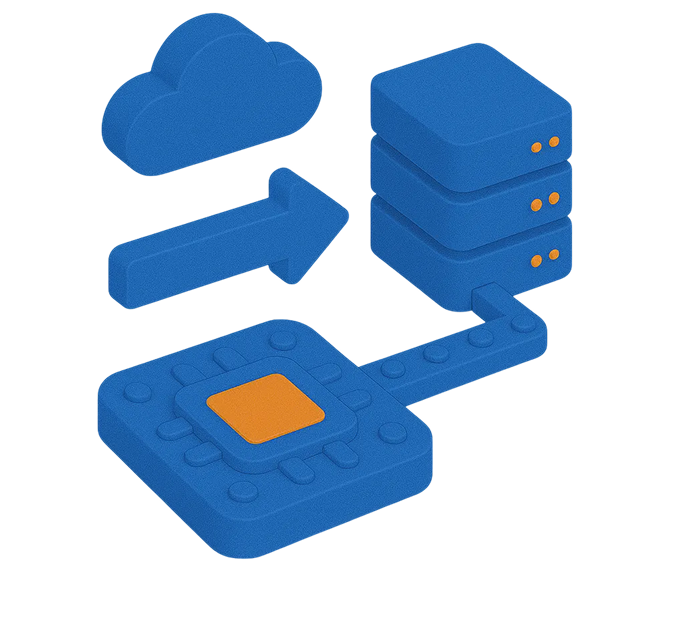
  • Architecture Blueprint – S3 raw bucket ▶ Step-Functions tiling ▶ SageMaker Training ▶ EC2 spot inference ▶ Dynamo trace DB ▶ S3 reports
  • North-Star KPIs – Segmentation IoU ≥ 80 %, review time -90 %, GLP audit pass, schedule compliance ≥ 95 %

Outcome: Backlog sized at 108 SP/sprint; target launch Week 21.

Solution Delivered

Smart Tiling & Pre-Processing

  • OpenSlide-based Lambda slices NDPI into 1024² tiles, skipping background via HSV threshold
  • Tiles stored in S3/tiles with parquet metadata (x,y,zoom); average slide → 28 k tiles

Segmentation & Classification Model

  • Mask R-CNN backbone ResNet-101 FPN fine-tuned on 12 k annotated patches
  • Focal-dice loss handles extreme class imbalance; data-augmentation (elastic transform, stain-normalization) boosts generalisation
  • Segmentation IoU 80 %, F1-score 0.78 across lesion classes (fibrosis, necrosis, hyperplasia)

Scalable Inference Pipeline

  • EC2 G5 spot fleet; Step-Functions batches tiles, writes masks back to S3
  • Inference cost USD 0.38 per slide vs. on-demand USD 1.02 (-63 %)

Abnormality Heat-Maps & Reports

  • Tiles re-assembled on the fly; lesions overlaid semi-transparent red
  • Auto-generated PDF with lesion percentages, severity grades, and thumbnails; pathologist signs digitally

ML-Ops & Traceability

  • SageMaker Experiments logs dataset hash, hyper-params, Docker digest; lineage fed to DynamoDB
  • Audit export script produces GLP appendix in 2 min; passed Part 11 inspection

Front-End Review Portal (Bonus)

  • Buffer dev built React viewer—zoom/pan NDPI via OpenSeadragon + lesion overlay toggle
  • Pathologists can re-label false positives; feedback auto-queues for incremental training

Execution Journey

Sprint
Notable Deliverables
KPI Shift
Predictability
Sprints 0
Discovery, threat model
Baseline review 82 min/slide
100 % gates
Sprints 1
S3 raw bucket, Lambda tiler
Pre-proc 17 min → 2.5 min
Risk-High WIP 16 %
Sprints 2
Mask R-CNN v0, SageMaker POC
IoU 52 % → 67 %
Buffer unused
Sprints 3
Focal-dice loss, stain normaliser
IoU 67 % → 78 %
Flex CV SME 16 h
Sprints 4
Spot-fleet inference, cost tags
Cost/slide $1.02 → $0.44
No slip
Sprints 5
Post-process stitching, heat-map
Review 82 min → 12 min
Hot-fix 0
Sprints 6
GLP trace DB, SageMaker Exp
Audit coverage 55 % → 90 %
Budget +3 %
Sprints 7
React viewer, re-label loop
IoU 78 % → 80 %
--
Sprints 8
Part 11 validation scripts
Audit coverage 90 % → 100 %
Flex Compliance 24 h
Sprints 9
Load test 500 slides batch
p95 inference 8.2 ms/tile
--
Sprints 10
(Week21)
Prod launch, pathologist training
Review 82 min → 6 min
Delivered 2 days early

Buffer engineer stepped in when ML dev had COVID during Sprint 5—velocity dip 0 SP.

Business Outcomes & Impact

Segmentation IoU 80 %; regulatory threshold met

Slide review time 82 min → 6 min (-92 %)

Study close-out 10 weeks → 4 weeks (-6 weeks)

Working-hour saving 250 h/study; annual capacity +14 studies

EC2 cost/slide USD 1.02 → USD 0.38 (-63 %)

GLP & 21 CFR Part 11 audit pass on first attempt—zero major findings

Productised as SaaS add-on → USD 2.3 M ARR forecast

Support tickets –48 %; pathologist NPS +19 points

Predictability premium (~8 % rate uplift) paid back in one study via capacity & SaaS revenue

Why Steady Rabbit?

Core-Flex Micro-GCC

CV & compliance SMEs parachuted in within 48 h; Buffer bench eradicated PTO risk

SteadCAST Predictability

97 % sprint adherence across 21 weeks

Shift-Left Governance

Seven Plan-Left gates slashed re-work 39 % with < 2 h overhead per sprint

Reg-Tech & ML-Ops Mastery

SageMaker lineage, Part 11 validation, spot-fleet optimisation

Outcome-Linked Engagement

KPIs (IoU, time, audit pass) tied to squad incentives—no vanity metrics

Transparent Partnership

Weekly demos, Slack war-room, open burn charts—zero surprises

Client Testimonial

Steady Rabbit

Director of Toxicology Analytics

I2E Consulting

Steady Rabbit delivered a GLP-compliant AI pipeline that cut our review time by 90 %. Auditors were impressed, clients are thrilled, and we hit every milestone without weekend heroics. Their Core-Flex model is predictability in action